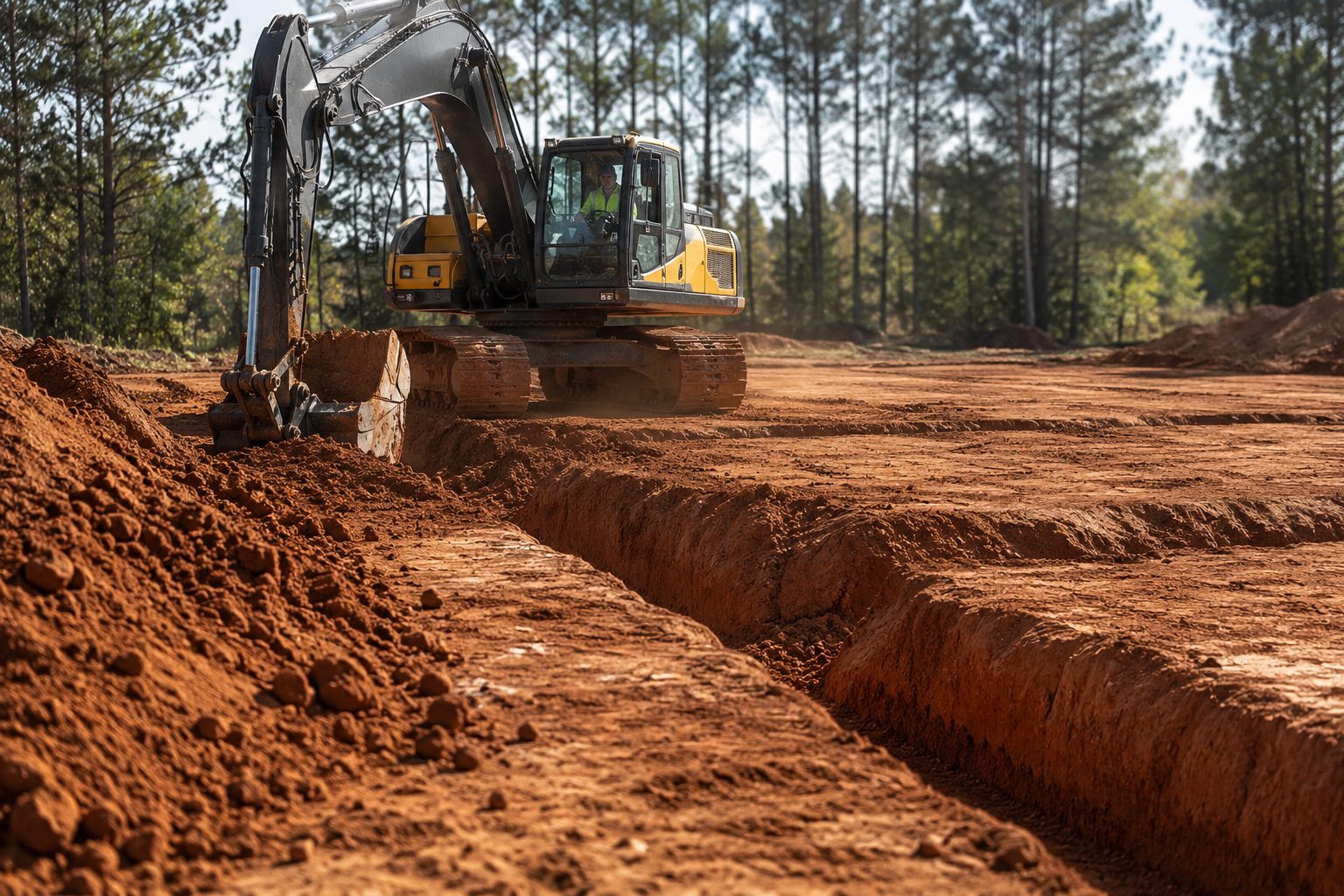
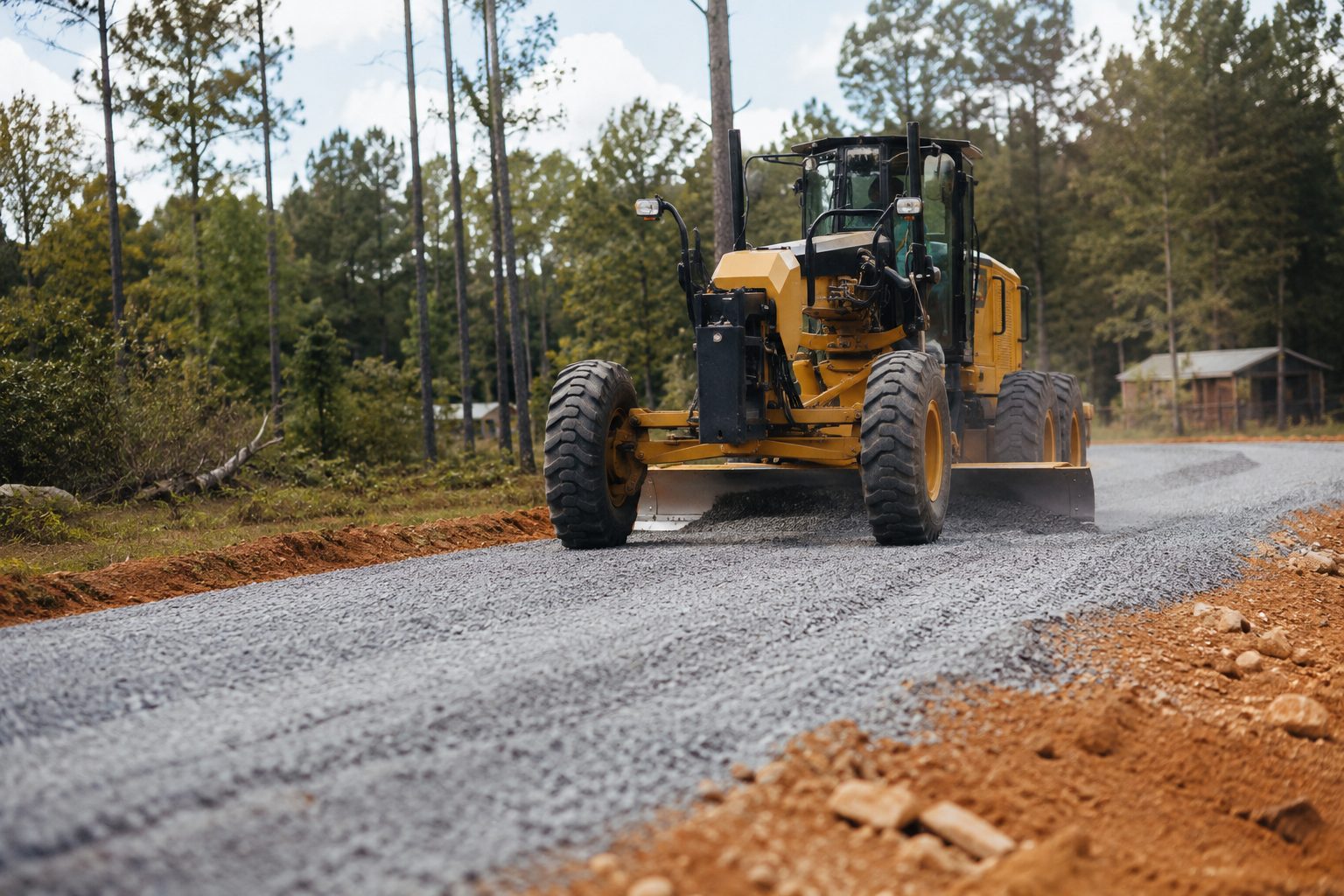
Excavation for Charlotte lots — footings and pads on red clay, drainage and French drains for yards that won't dry, trenching around old utilities, mini-excavator access through the side gate. Flat quotes.
Excavation in Charlotte is small-machine work with big consequences. Footings for an addition off the back of a Dilworth bungalow, a pad for a detached garage in Sedgefield, a French drain along the side of a Cotswold house whose crawlspace floods every spring, a trench for a new water line under a yard that's been dug and filled three times in eighty years. The soil is red clay, the lots are tight, the utilities are old and not where the map says, and the way in is through the side gate.
Ranges for footings, pads, drains and trenches on city lots. The cost guide has more; rock and old utilities are planned for in the number, not added after.
Written flat number after the site walk and the utility locate. Never hourly.
Charlotte's clay is dense and it doesn't drain, and that shapes every dig. A footing trench cut into it holds its shape well and bears well once compacted, which is the good news. The bad news is the crawlspace and the side yard: water that can't soak in sits against the foundation, and a Charlotte drainage job means giving it a path — a French drain along the wall, a swale across the yard, a pipe to the street — and building that path with the fall to actually carry water in ground that fights it.
Old neighborhoods mean old utilities. The sewer lateral on a 1930s Elizabeth lot may be clay pipe two feet from where the record puts it; the water line may have been replaced once and rerouted; the gas service may be shallower than anything modern. We have every dig located before the bucket goes in and we hand-dig where the locate is uncertain. A trench through a Charlotte yard is as much about what's already in the ground as what's going in.
Rock shows up in parts of the city, particularly south and east, as a shelf a few feet down. It changes a footing dig from a morning to a day. We can't see it from the surface, but we can tell you where it's likely and we quote the plan for it rather than discovering it on your invoice.
Most of it is additions and drainage. Charlotte's older neighborhoods — Dilworth, Elizabeth, Chantilly, Sedgefield, Madison Park — are full of houses being extended off the back, and every extension starts with footings dug in a yard with a fence on three sides. The drainage work is the same streets: crawlspaces and side yards that never dried out because the lot was graded once, decades ago, toward the house.

Our loader and dump truck fit through any 8 ft gate, and for backyard work in Charlotte the digging machine is a mini-excavator that fits the same opening. That's how a footing dig or a drain trench reaches the back of a house in Plaza Midwood or Myers Park without taking the fence down. The machine size is chosen for the gate first and the dig second.
Spoil is the tight-lot problem. A footing dig or a drainage trench produces clay, and a Charlotte back yard has nowhere to pile it. We haul as we dig — the loader ferries spoil to the truck at the street — or we set it aside for backfill where the plan calls for it. Either way the yard isn't a clay mountain for a week.
Backfill on clay is done in lifts and compacted, particularly around a foundation or a pad. Loose clay pushed back into a trench settles for a year and takes the patio, the walkway or the slab with it.
A French drain in Charlotte clay is only as good as its outlet. The pipe carries water along the wall, but the water still has to leave — to a lower part of the lot, to a swale, to the street. We find the outlet first and dig the drain to reach it with real fall; a drain that ends in a dry well dug into clay is a bathtub with a pipe in it.
Footings and foundations for a permitted structure are inspected under the building permit your builder or contractor pulls through Mecklenburg County; our part is digging to the drawing and being ready for the inspector. Land disturbance on a residential lot stays well under the county's erosion-control threshold. The two checks we make on every Charlotte dig are the county stream-buffer map — many city lots back to a protected creek — and the City of Charlotte's right-of-way rules if a drain outlet or a trench reaches the street.
If a permit turns out to be required, we pull it ourselves and pass the city or county fee through unchanged. There is no markup and no handling charge on it.
Spoil that has to leave goes the same day to disposal inside Mecklenburg County. Where it can stay and fill a low spot on the lot, it does.

We walk the lot within a few days, watch where the water sits, check the gate and the route, and get utilities located before we plan the dig.
One written, all-in number by the next business day, with rock and old utilities planned for rather than surprised by. Any city approval at the street at cost.

Mini-excavator through the gate. Footings to the drawing, trenches with real fall, spoil hauled as we go, backfill compacted in lifts.

Footings ready for the inspector, drains carrying water off the lot, yard graded and clean.
A footing dig comes with a pad and a grade; a French drain comes with a regraded side yard; a garage foundation comes with a driveway cut. The same crew handles the sequence so the dig, the grade and the drainage agree with each other.
Send the address and what you're dealing with. We'll walk it within a few days and hand you a flat, all-in number.
📞(980) 351-5115Tap to call · A real owner picks up · Site walk within a few days