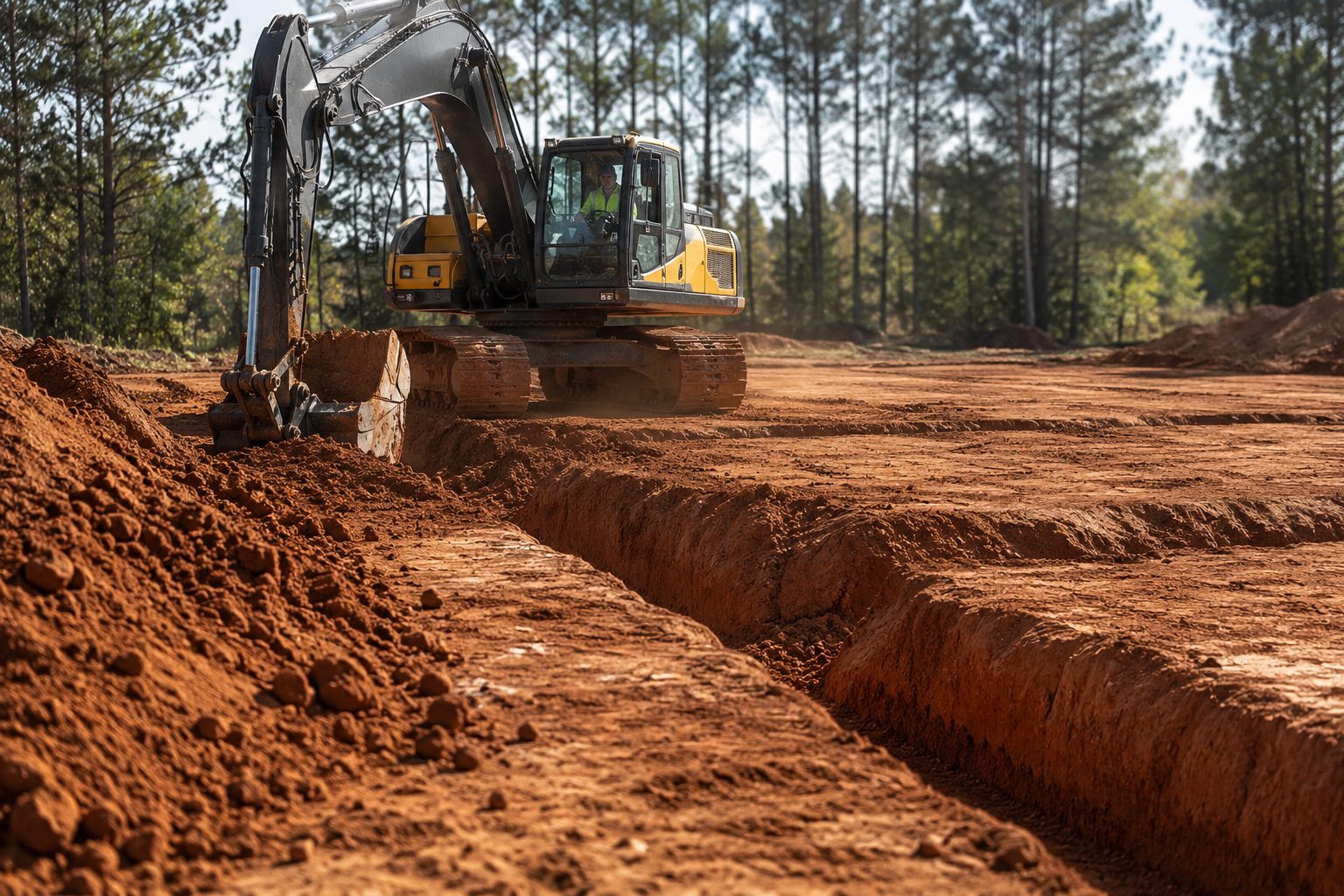
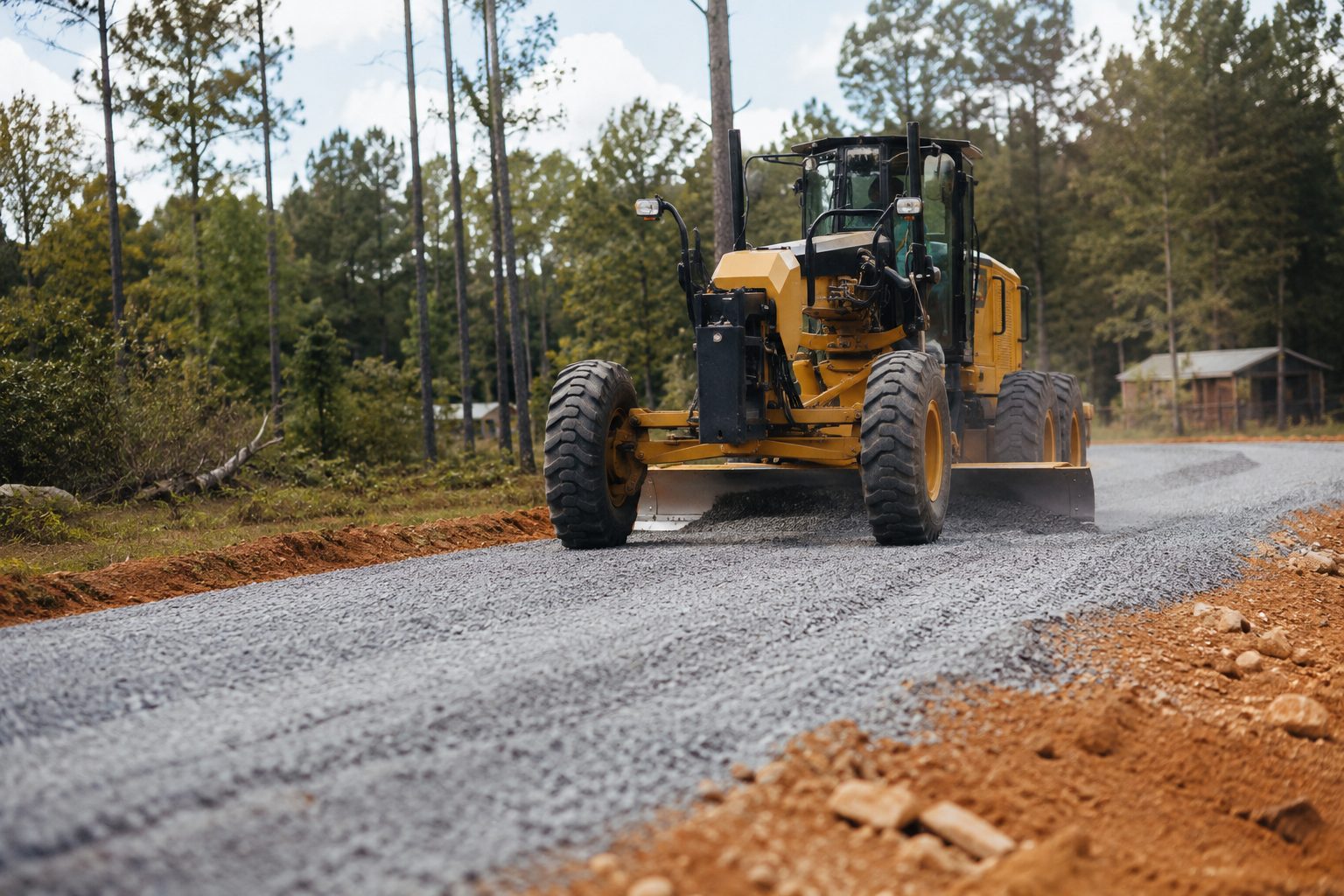
Excavation for Mooresville and Lake Norman — footings on sloped lake lots, retaining-wall cuts, septic-related digging, drive cuts on acreage, drainage that carries water across the slope. Flat quotes.
Mooresville excavation is slope work. A lake lot on the Brawley School Road peninsula drops from the road to the water, and everything — the house bench, the footings, the drive, the retaining walls that hold it all — has to be cut into that grade and drained so it stays put. Off the water, on Iredell County acreage toward Troutman, the digs are bigger and simpler: a shop foundation, a barn pad, a long drive cut, a trench for a new well line or a septic system. Either way we bring the excavator the job needs, not the one that fits a city gate.
Figures for benches, footings, walls, septic digs and long trenches around Mooresville. Detail in the cost guide; each part of the job is stated separately.
One written figure, parts itemized, after we read the slope. No hourly billing.
A lake-lot dig starts with where the water will go once the ground is open. Cut a house bench into a clay slope above Lake Norman and leave it through a storm and the bench washes into the lake, along with the neighbor's patience. So the drainage is designed before the footing: swales across the slope, silt control at the low side, a path for runoff that isn't the shoreline. Footings and retaining-wall cuts go in after that plan is in place, and backfill behind a wall is compacted in lifts with drainage behind it, not dumped.
Septic is the other Mooresville dig. Most lots outside the newest subdivisions are on it, and a new system, a repair or a replacement drain field means excavation to the county's layout, on the county's schedule for inspection. A well line or a new water service on acreage is a long trench across ground that may not have been dug in decades — located first, cut with fall, backfilled and compacted so the yard doesn't show the line a year later.
Acreage digs — a shop or barn foundation, a big pad — are the straightforward part. Room to work, room for spoil, clay that bears well once compacted. The care is in cutting to level rather than filling to level, so the slab doesn't settle on the low side.
The lake lots keep the excavator busiest — benches and footings on the Brawley peninsula, retaining walls where a drive drops to a house, drainage on the slopes above the water. The acreage toward Troutman and Sherrills Ford brings the bigger, simpler digs: shop foundations, barn pads, long well and water-line trenches, and the occasional drive cut across a rolling field.

Our loader and dump truck fit through any 8 ft gate, but on a Mooresville lot we're rarely limited by a gate — we're choosing between a mini-excavator for a septic trench beside the house and a large machine for a house bench or a shop foundation. The same large excavator we run on lakefront teardowns does the heavy cutting; the mini does the work close to the house, the well and the drain field.
The constraint is the ground and the slope. A heavy machine across wet clay on a grade toward the water leaves ruts that turn into channels, and a bench cut in the wrong week is a washout waiting for rain. We check the forecast and the ground before a lake-lot dig and hold if it can't take the machine. Work runs across the slope, and the low side is protected before anything is opened.
Spoil on acreage usually stays — there's a low spot somewhere that needs it, or a bench that needs fill on the high side. On a lake lot with no room, spoil is hauled the same day to disposal inside Iredell County so it isn't sitting on the slope through a storm.
Retaining walls deserve their own note. A wall on a lake lot holds back clay that wants to move toward the water, and the failure is almost never the wall itself — it's the drainage behind it. We cut for the wall with room for gravel and a drain behind the face, backfill in lifts, and give the water behind the wall somewhere to go. That's what keeps a Mooresville wall vertical through its tenth spring.
Footings and foundations are inspected under the building permit through the Town of Mooresville or Iredell County, depending on where the lot sits; our part is digging to the drawing and being ready when the inspector comes. Septic work is inspected by the county's environmental health office to its layout. Land disturbance on the lake side of town falls under the county's watershed overlay, and anything at or below the shoreline belongs to Duke Energy's program — we stay above it. We confirm which of these applies to your lot on the site walk.
Should any of those offices require a permit, we handle the paperwork and you pay exactly what the town or county bills — the fee shows on our invoice at cost, with nothing added.
Spoil that has to leave goes the same day to disposal inside Iredell County. On acreage it usually stays and does a job somewhere on the property.

We walk the lot within a few days, locate the septic, well and shoreline line, read the slope and the forecast, and plan where the water goes before we plan the dig.
One written, all-in number by the next business day — bench, footings, walls, trenches and drainage stated separately. Permit fees at cost.

Silt control first. The right machine for each part, working across the slope. Backfill and wall drainage compacted in lifts.

Footings ready for the inspector, slope draining across not down, drive and pad ready for the next trade.
The house bench leads to the footings, the footings to the retaining wall, the wall to the drive cut, and the drive to the culvert at the road. The same crew carries the drainage plan through all of it, so the slope works as one system when the builder arrives.
Send the address and what you're dealing with. We'll walk it within a few days and hand you a flat, all-in number.
📞(980) 351-5115Tap to call · A real owner picks up · Site walk within a few days