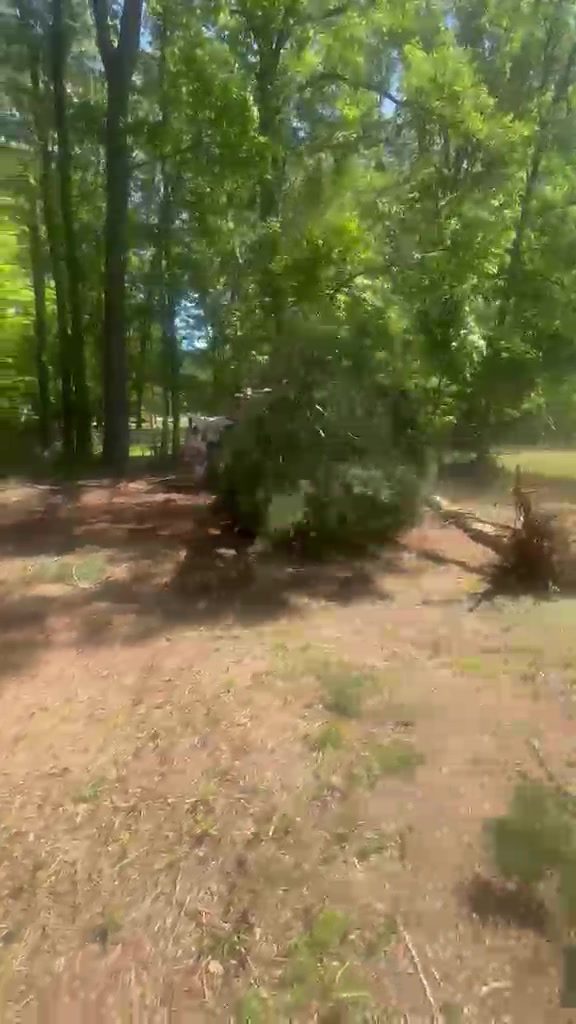
Forestry mulching for Charlotte's wooded edges β underbrush and small trees ground in place, nothing hauled, the canopy and the ground cover kept. Flat written quotes, permits handled where required.
Forestry mulching is the Charlotte job for a lot you want opened up, not stripped. It grinds privet, honeysuckle, saplings and small trees into a layer of mulch that stays on the ground β no grubbing, no dump trucks, no bare clay. That makes it the right tool for the wooded edges of Steele Creek, Highland Creek and the University area, for the overgrown back acre behind a Ballantyne cul-de-sac, and for any Charlotte lot where the county's stream buffer or the city's tree rules mean you can't just clear it.
Ranges for the wooded edges and back acres we see inside the city. The cost guide has the full breakdown; the number you get is written and flat.
Written flat number after we walk it. No hourly billing, no disposal line.
Two Charlotte-specific rules push jobs toward mulching. Mecklenburg County protects buffers along its creeks and streams, and a surprising number of city lots back up to one β Little Sugar Creek, McAlpine, McMullen, Briar Creek and their tributaries run through neighborhoods, not just parks. Inside a buffer you generally can't grade or grub, but you can often cut and mulch the understory because the roots and the soil stay put. The second rule is the City of Charlotte's tree ordinance, which can protect mature trees on a lot. Mulching lets us take everything under the canopy and leave the trees the city cares about standing and unharmed.
Underfoot it's red Piedmont clay, which is the other argument for mulching in town. Grub and haul a wooded Charlotte lot and you're left with bare clay that seals in the first rain and runs orange down the street. Mulch it and the ground is covered the moment the machine leaves β no silt fence, no seeding, no erosion call from the neighbor.
The Charlotte jobs that actually come to us are edges and corners: the strip along a back fence in Mint Hill-side east Charlotte that's gone to privet, a wooded half-acre behind a house in Steele Creek that the owner wants to walk through, a lot line in the University area that hasn't been touched since the subdivision went in. Rarely acreage β usually the part of a lot the previous owner gave up on.
Where it comes up most: the wooded lot lines in Highland Creek and Mallard Creek, the strips of woods that separate older Steele Creek subdivisions from the farmland that used to be there, and the back acres off Rea Road and Providence where a lot was left wooded on purpose and has since filled in. In every one of those the owner wants the woods, not a field β they just want to be able to see through them and walk in them.

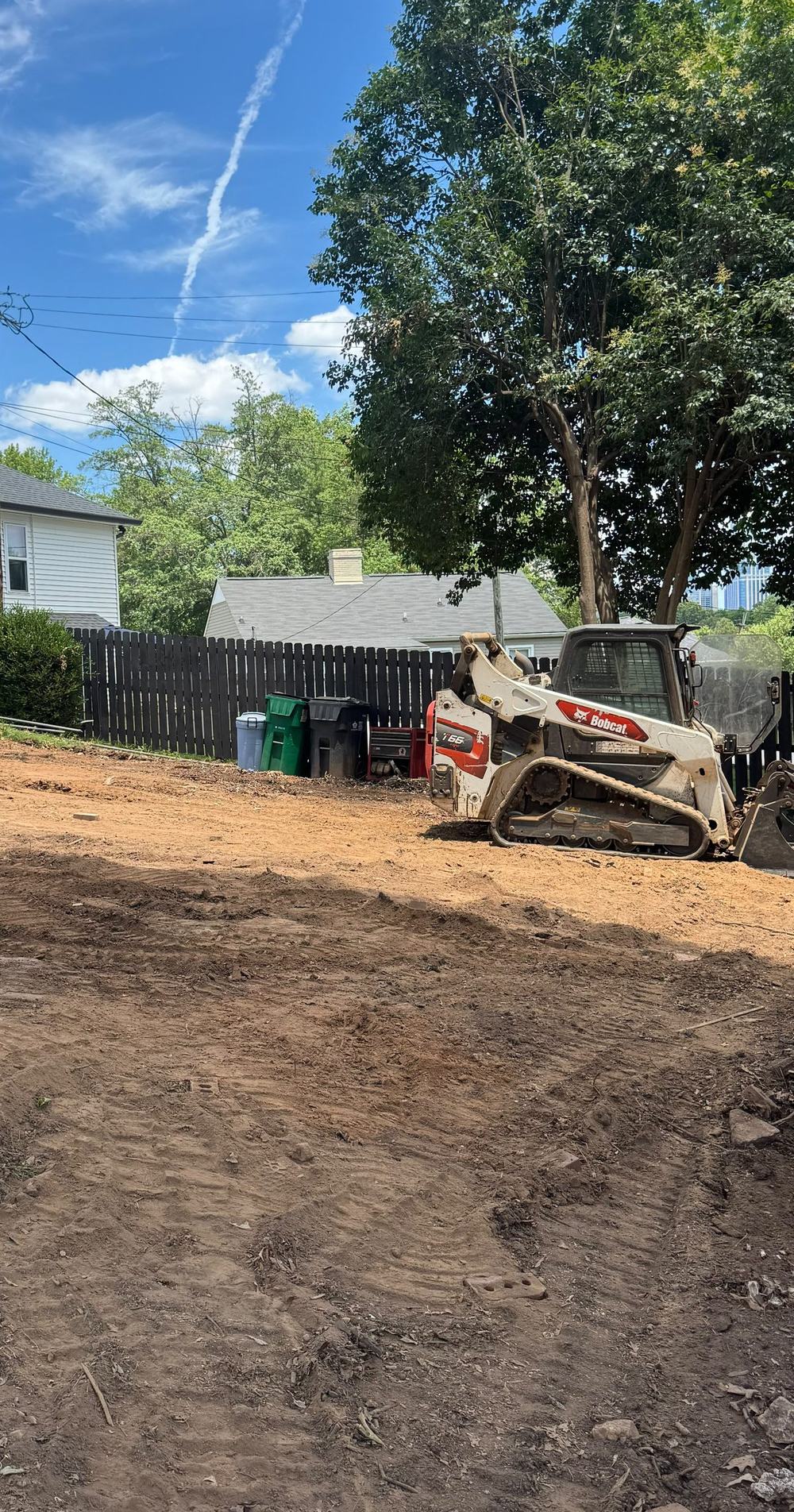
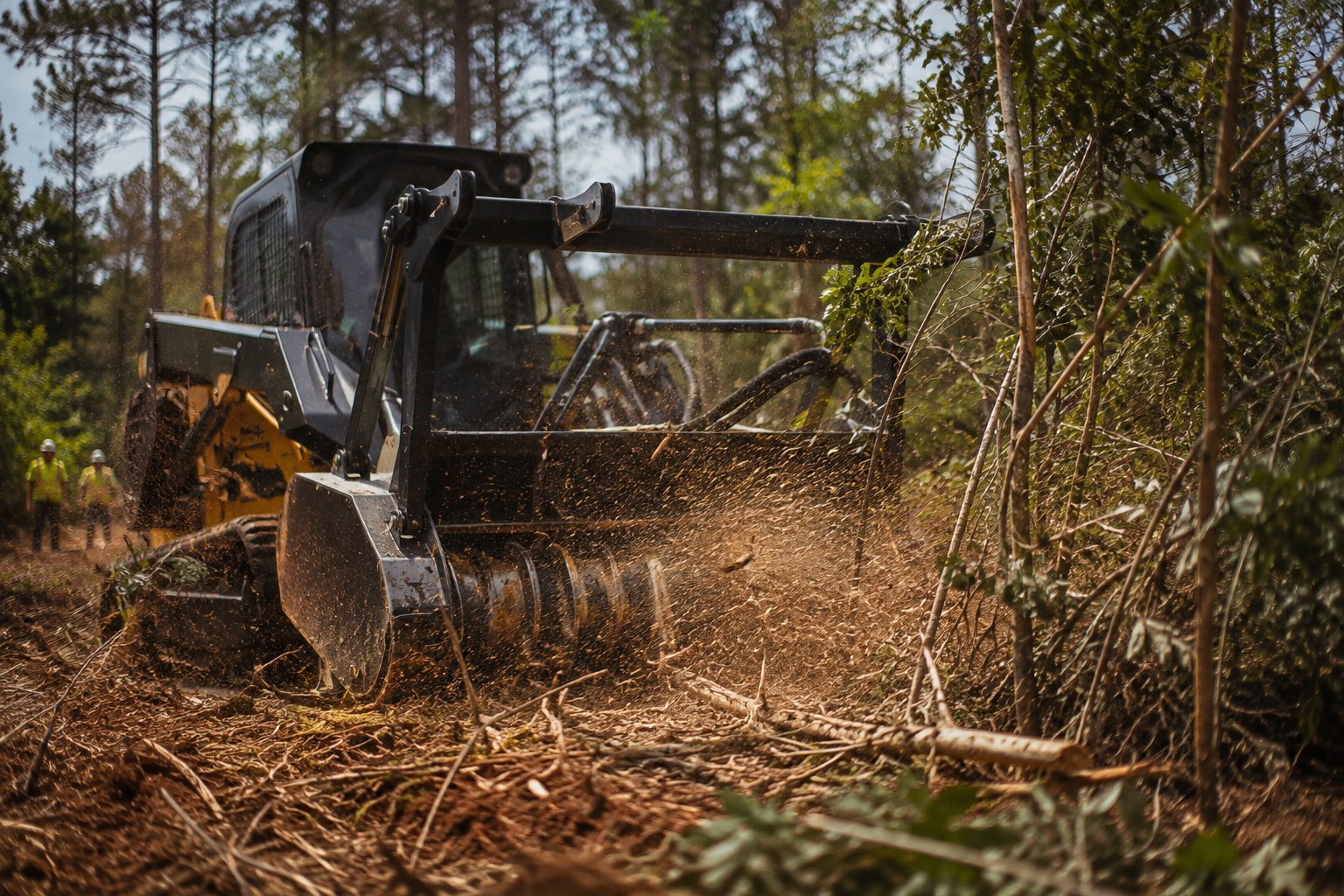
Our track loader and dump truck fit through any 8 ft gate, and the mulcher rides on the loader β so a forestry mulching job in Charlotte is one machine through one side-yard gate with no trucks following it. That is the practical reason it works on infill lots where a full clearing crew wouldn't fit. No dumpster in the driveway, no dump truck on the street, no HOA letter about equipment.
The trade-off is what the machine can't do. A mulcher handles brush and trees up to a modest trunk size; it does not remove stumps or grade. If your plan needs a pad or a driveway, that's land clearing and we'll say so on the site walk. And on a saturated clay lot we'll wait β a tracked machine working across wet clay under a hardwood canopy compacts the root zone of the trees you're trying to keep.
Because nothing is hauled, there's no disposal line on a Charlotte mulching quote and nothing goes to the county landfill. The mulch layer is the finished product: it holds the slope, shades out the regrowth for a season, and breaks down into the soil.
Timing in town follows the leaves. Late fall through early spring, when the understory is bare and the canopy is open, is when a mulching job goes fastest and the operator can see every trunk that has to stay. We'll mulch in July if you need it, but a Charlotte lot in full leaf is slower work and we quote it that way.
Mulching usually stays well clear of the land-disturbance threshold that triggers Mecklenburg County's erosion control plan, because no soil is moved. The two things we do check on every Charlotte lot are the county stream-buffer map and whether any tree on the site falls under the city's tree ordinance. If either applies, the mulching plan is drawn around it and we tell you exactly what stays.
If a permit turns out to be required, we pull it ourselves and pass the city or county fee through unchanged. There is no markup and no handling charge on it.

We walk the lot within a few days, check the stream-buffer map and any protected trees, and mark what stays.
One written number by the next business day, by the area or the day depending on density. No disposal line β nothing is hauled.

One loader with the mulcher head, through the gate, single pass. Underbrush and small trees ground in place under the canopy.

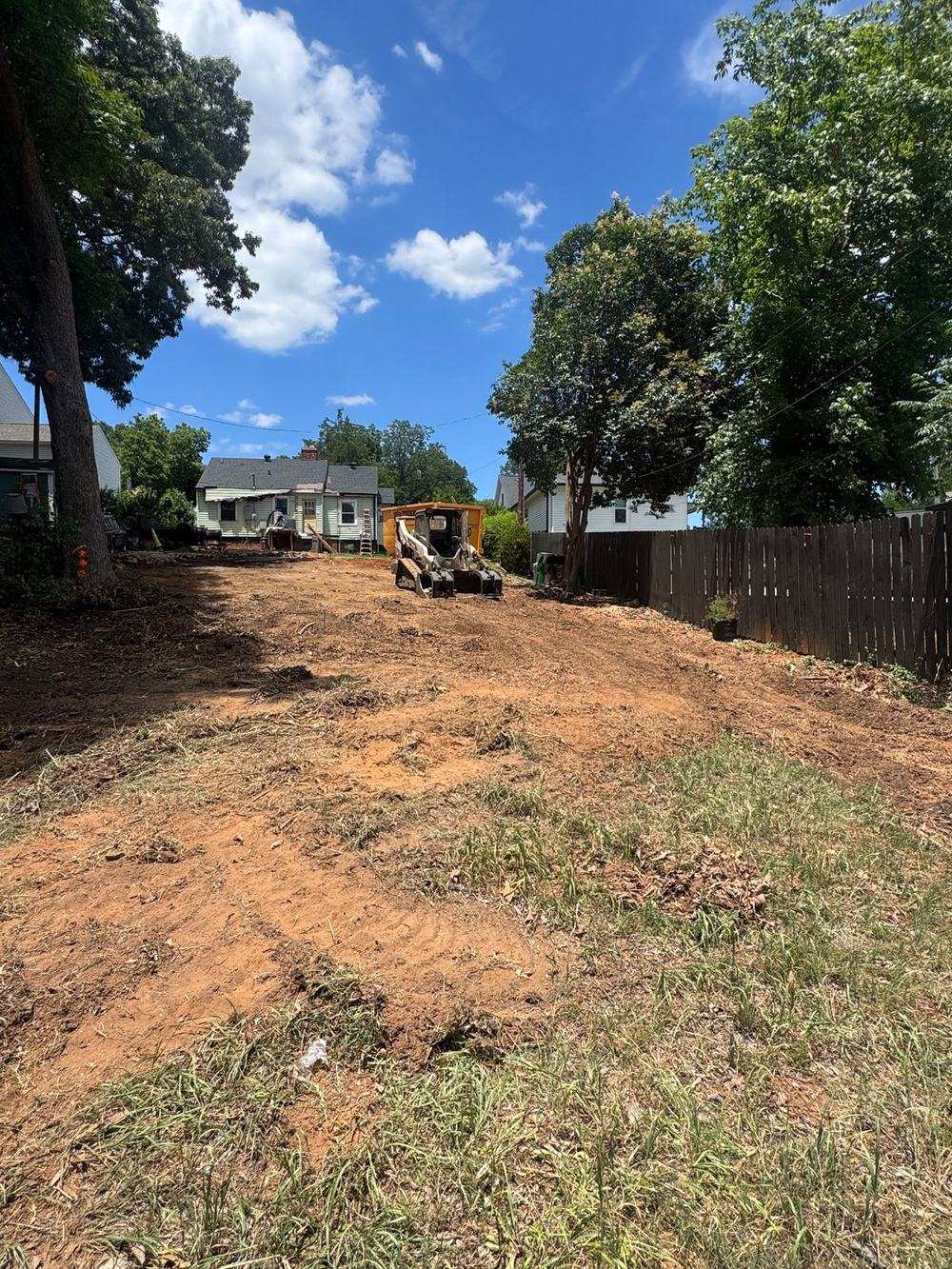
Lot open, mulch layer down, trees you wanted kept still standing. Ready to walk, plant or plan.
If the mulched edge later becomes a pad, a drive or a fence line, the same crew that ran the mulcher does the grading, the stumps and the haul-off β with the buffer and tree rules already mapped from the first visit.
Send the address and what you're dealing with. We'll walk it within a few days and hand you a flat, all-in number.
π(980) 351-5115Tap to call Β· A real owner picks up Β· Site walk within a few days