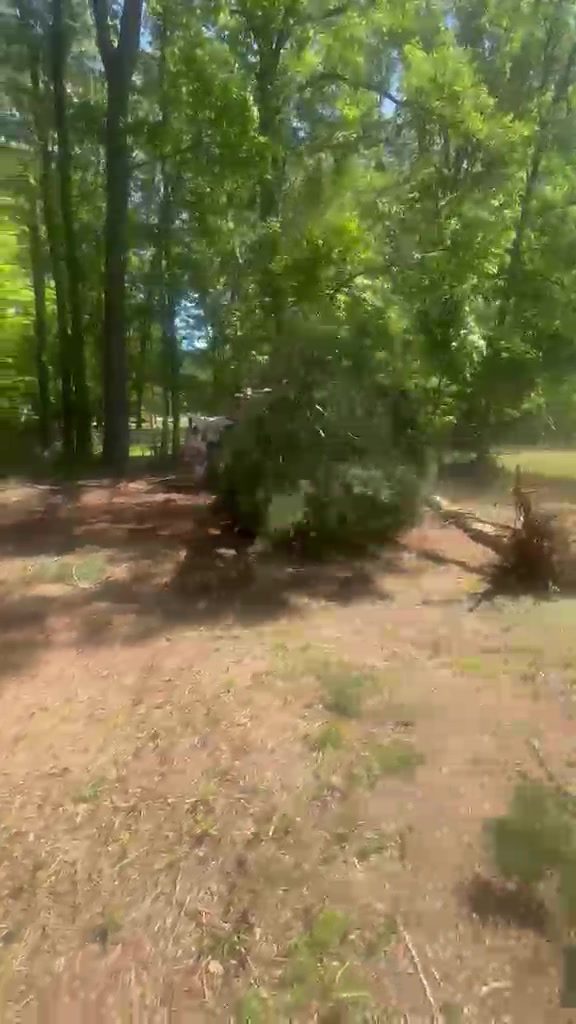
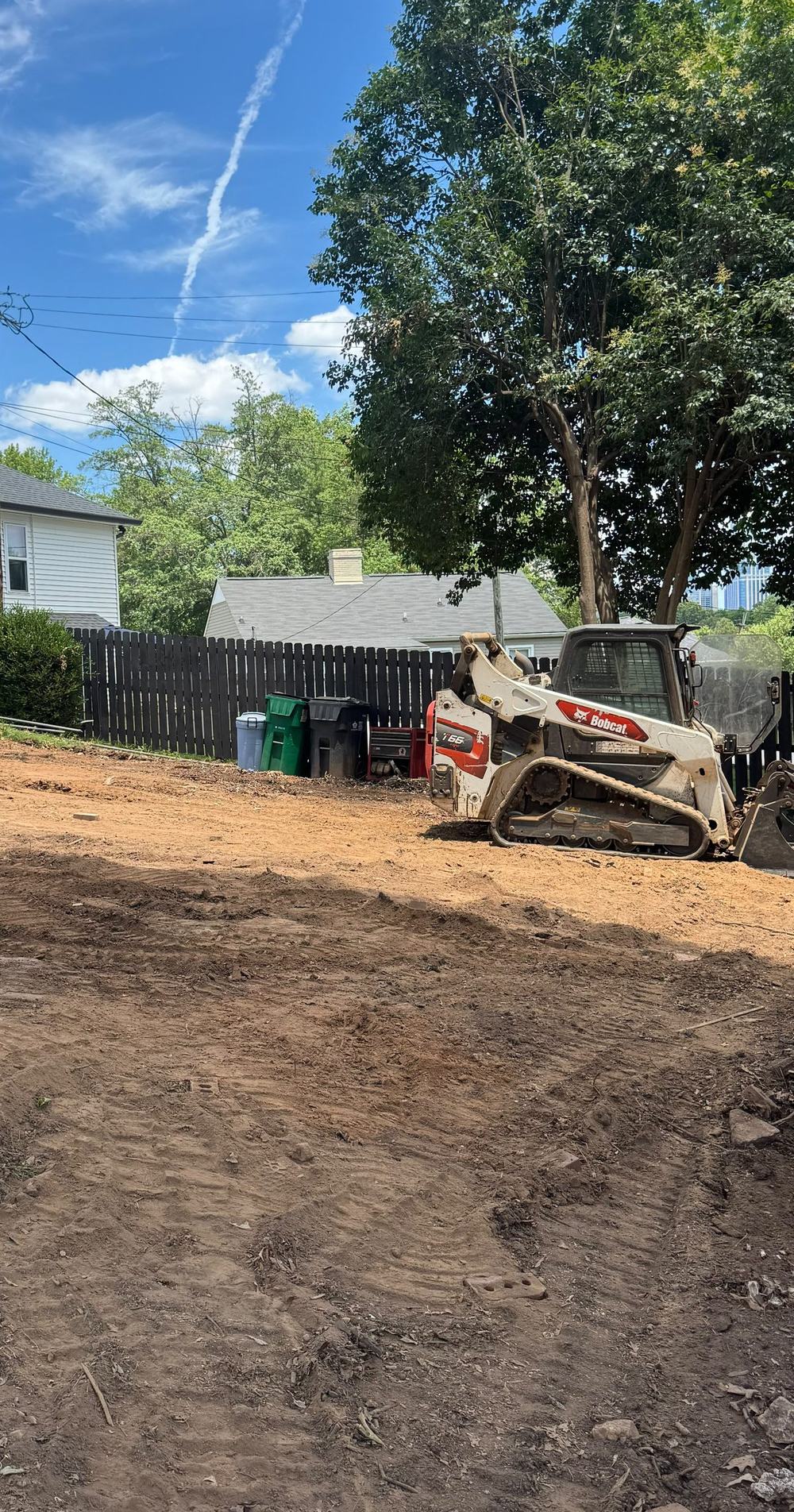
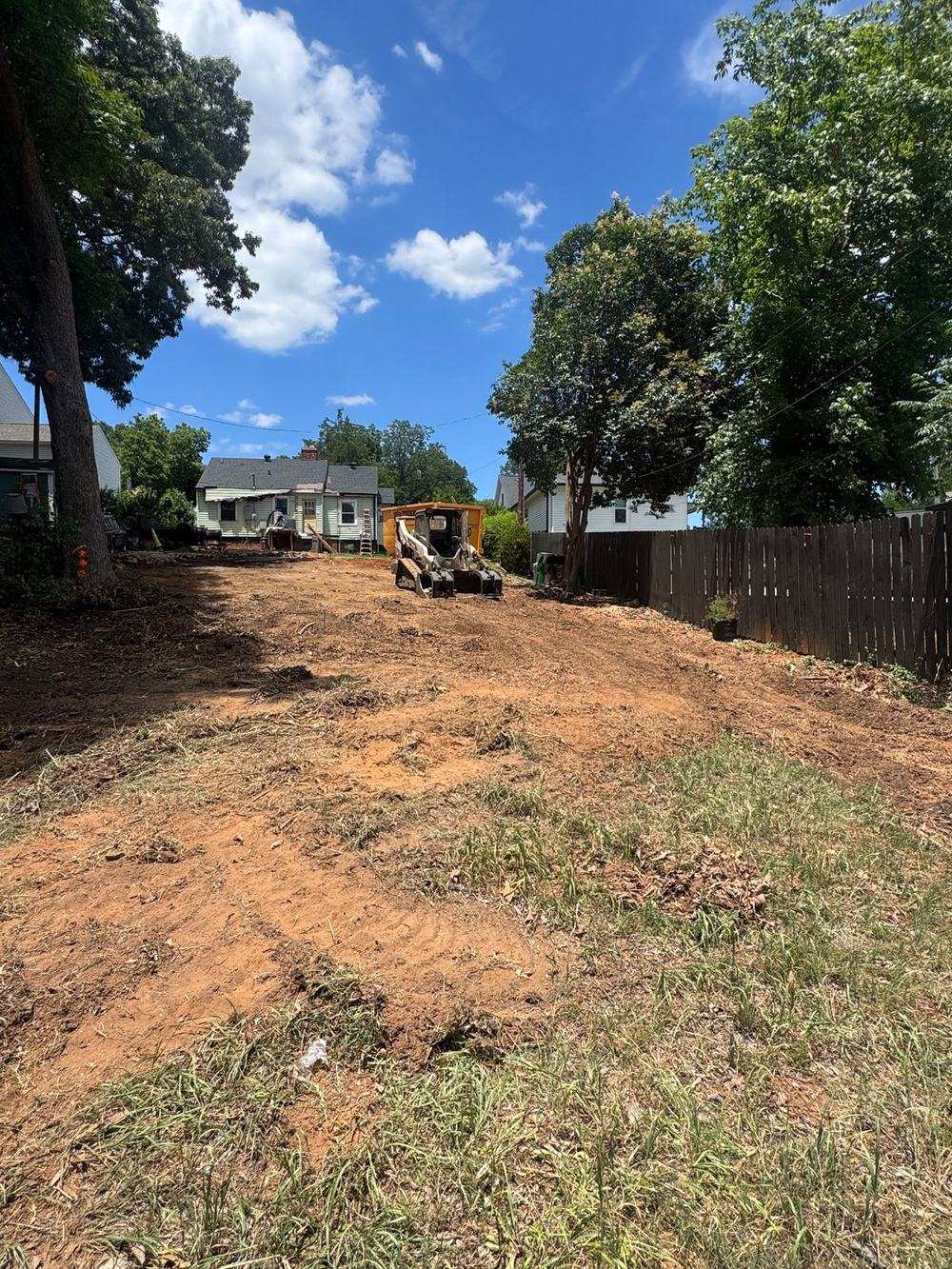
Forestry mulching for Lake Norman lots and Iredell County acreage — pine, scrub and privet ground in place so the slope holds and the view opens without disturbing the shoreline. Flat written quotes.
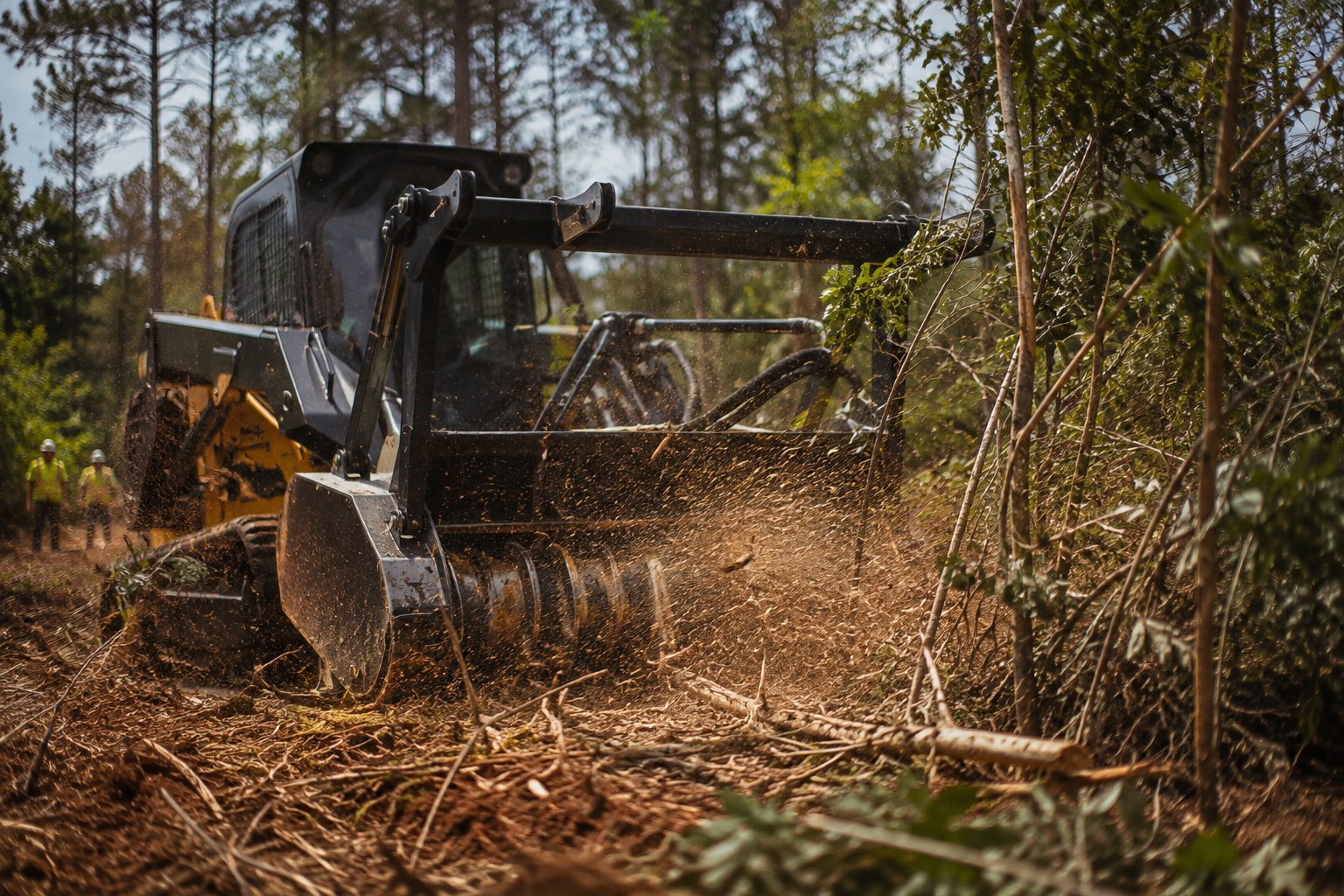
Around Mooresville the mulching jobs are bigger and simpler than in town: a few acres of pine and sweetgum scrub off Highway 3 toward Troutman that the owner wants to see across, a lake lot on the Brawley School Road peninsula where the shoreline can't be graded but the view can be opened, a horse property whose back pasture has gone to privet and honeysuckle. The mulcher grinds all of it in place, the ground stays covered, and nothing has to be hauled up a long driveway.
Typical figures for the pine, scrub and view-clearing work north of the city. Full detail in the cost guide; your quote is a single written figure.
Flat, in writing, after the site walk — and nothing hauled means nothing to dispose of.
Most of the growth on Iredell County acreage is exactly what a mulcher was built for: loblolly pine volunteers, sweetgum, cedar, privet and blackberry that took over a field or the edge of a lot in the years since it was last worked. None of it is worth hauling. Ground in place it becomes a mulch layer that shades out the next round of seedlings and holds the red clay on the slope, which matters on land that rolls toward the lake.
Lake lots are the other half of the Mooresville work. Duke Energy manages the Lake Norman shoreline and the town and county have watershed rules above it, so you usually cannot grade or grub near the water. Mulching is often the tool that opens a view within those rules, because the roots and soil are left undisturbed. We confirm the buffer for your specific lot on the site walk and keep the machine above it.
Off the water, the septic field is the thing to respect. Nearly every Mooresville lot outside the newest subdivisions is on septic and many are on wells. The mulcher is lighter on the ground than a grubbing job, but we still locate the drain field and the well head first and route the machine around them.
The parcels we see most are off Highway 150 and Highway 3 between Mooresville and Troutman, the older lots on the Brawley peninsula that were never fully cleared when the houses went in, and the bigger tracts up toward Sherrills Ford and the Catawba County line where a field went to pine after the last owner stopped cutting hay. Different owners, same growth, same machine.
Our track loader and dump truck fit through any 8 ft gate, though on most Mooresville parcels the gate isn't the question — the driveway is. Long gravel drives, lake lots that end at the water with nowhere to turn a truck, and pastures with one entry off a state road all favor a job that runs on a single machine. Mulching is that job: the loader goes in with the head on it, works, and comes out. No container to place, no dump truck to turn around.
What we watch is the ground itself. Rolling clay holds water in the low spots, and a tracked machine across a soft pasture leaves ruts that outlast the job. We'll shift a start by a few days after heavy rain rather than leave you with a rutted field under the mulch. On steeper lake-lot slopes we work across the grade, not down it, so the mulch layer stays put.
There is no disposal on a mulching job — nothing goes to the Iredell County landfill and there is no dump-fee line on the quote. The mulch is the finish. On acreage that will be pastured or mowed, we can grind lower on a second pass so the ground is workable sooner.
Iredell County ground drains a little better than city clay but it still holds water in the hollows, and a pasture that looks dry from the road can be soft in the middle. We check the low ground on the site walk, not the day of, so the schedule we give you is one we can keep.

Because no soil is moved, mulching usually stays outside Iredell County's erosion-control requirements, but two other rules can reach a Mooresville job. Inside the town limits, the Town of Mooresville has tree and buffer provisions that can apply to larger parcels. On the water, the shoreline strip belongs to Duke Energy's program. We check both for your parcel before quoting and draw the mulching line where the rules put it.
Should any of those offices require a permit, we handle the paperwork and you pay exactly what the town or county bills — the fee shows on our invoice at cost, with nothing added.

Within a few days we walk the parcel, find the septic field and the well, check the shoreline buffer if the lake is involved, and flag the trees that stay.
By the acre or by the day, one figure in writing by the next business day. Nothing hauled, nothing to dispose of.

One machine up the drive and across the grade in a single pass, grinding pine, scrub and privet into a layer that holds the slope.

View open, pasture or lot cleared to mulch, trees and shoreline you wanted kept untouched.
If the mulched field later needs a pad, a drive cut, a septic-related dig or stumps pulled for a foundation, the same crew comes back with the excavator and the grading gear — the shoreline and septic map already made.
Send the address and what you're dealing with. We'll walk it within a few days and hand you a flat, all-in number.
📞(980) 351-5115Tap to call · A real owner picks up · Site walk within a few days