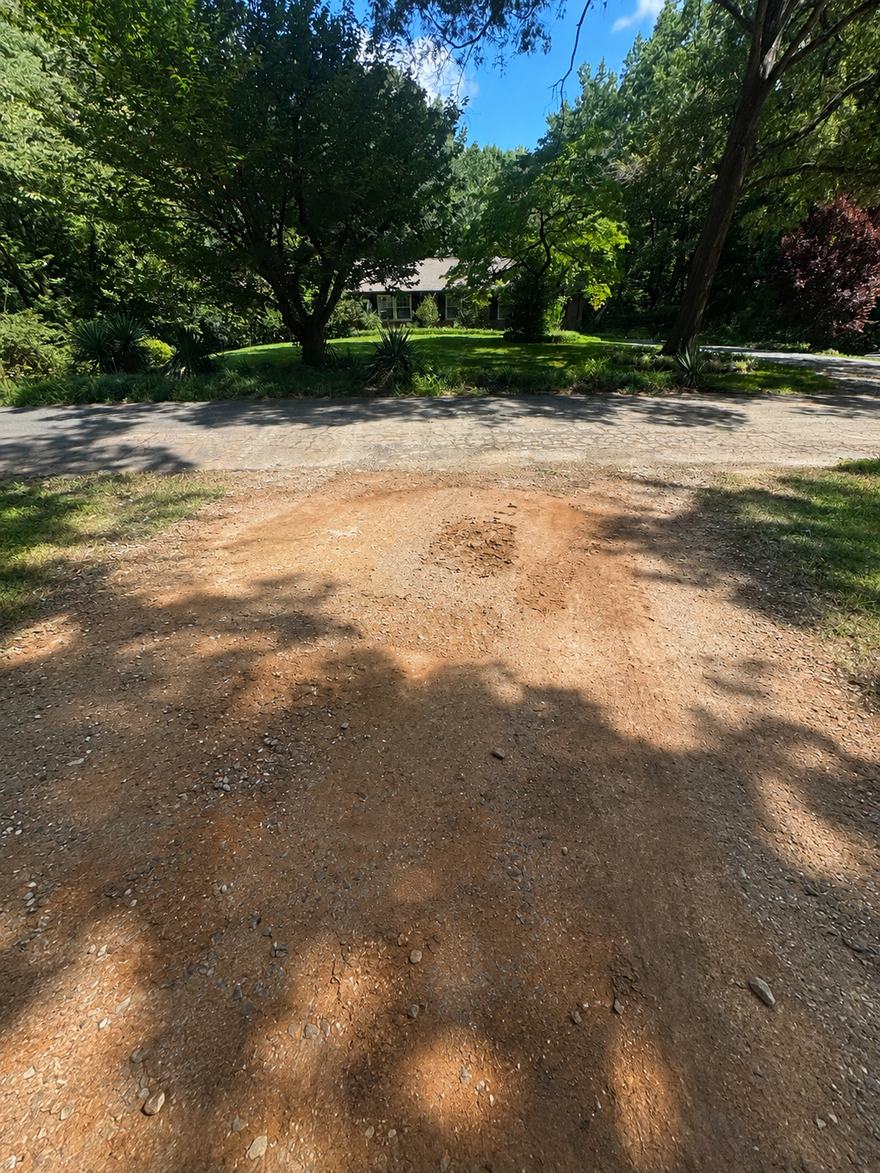
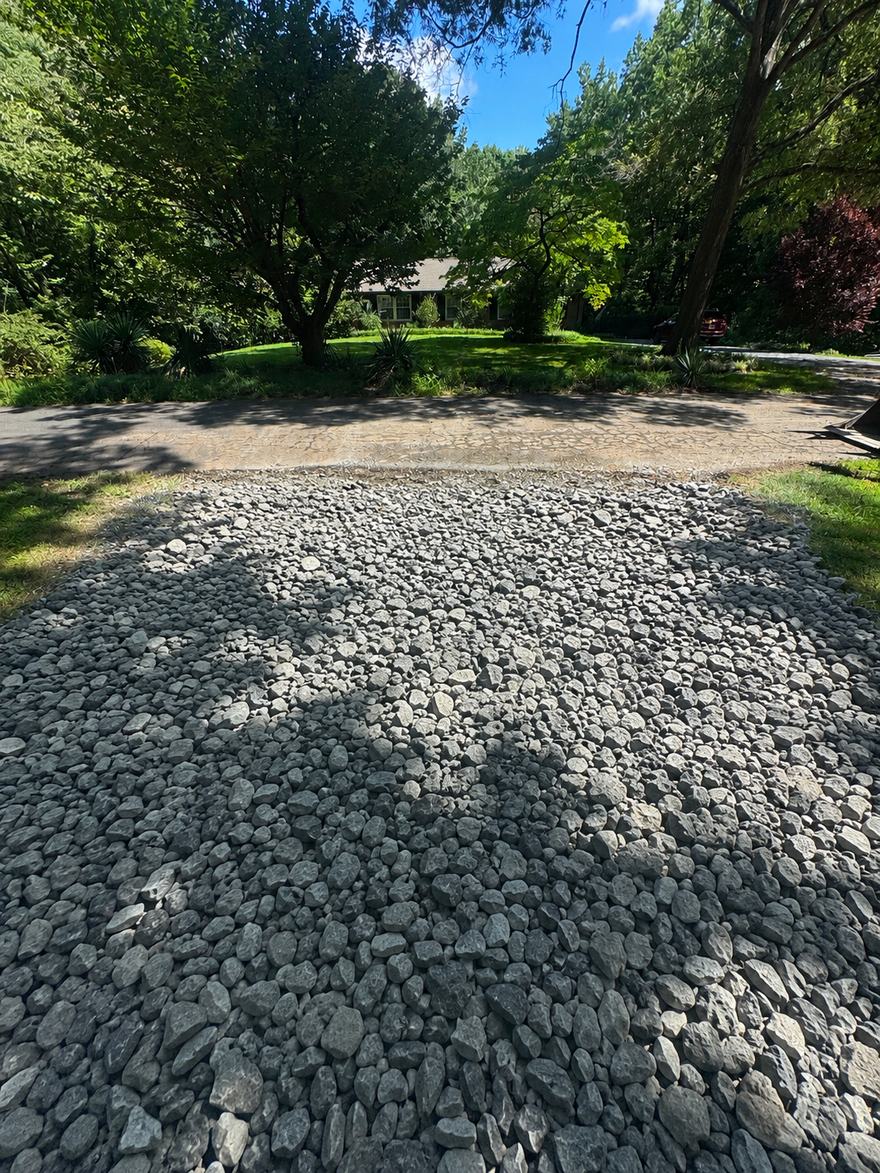
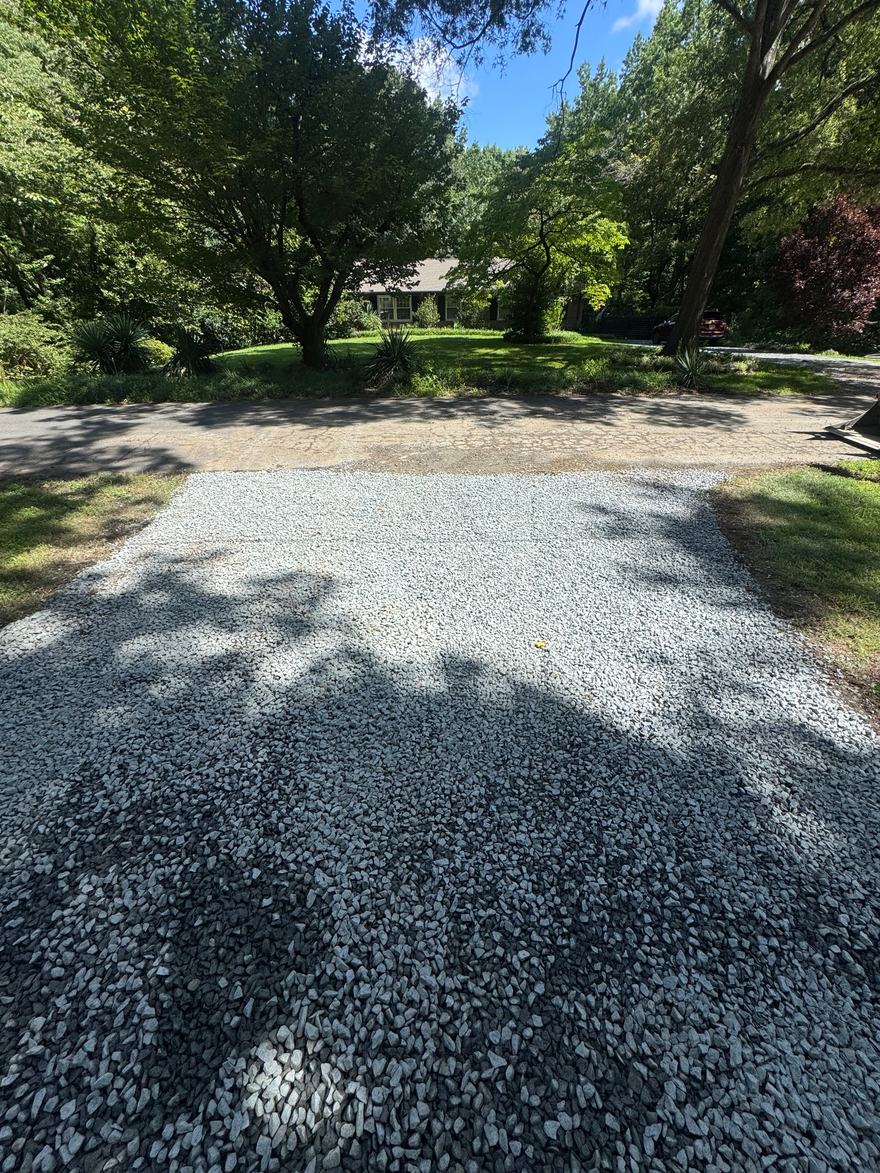
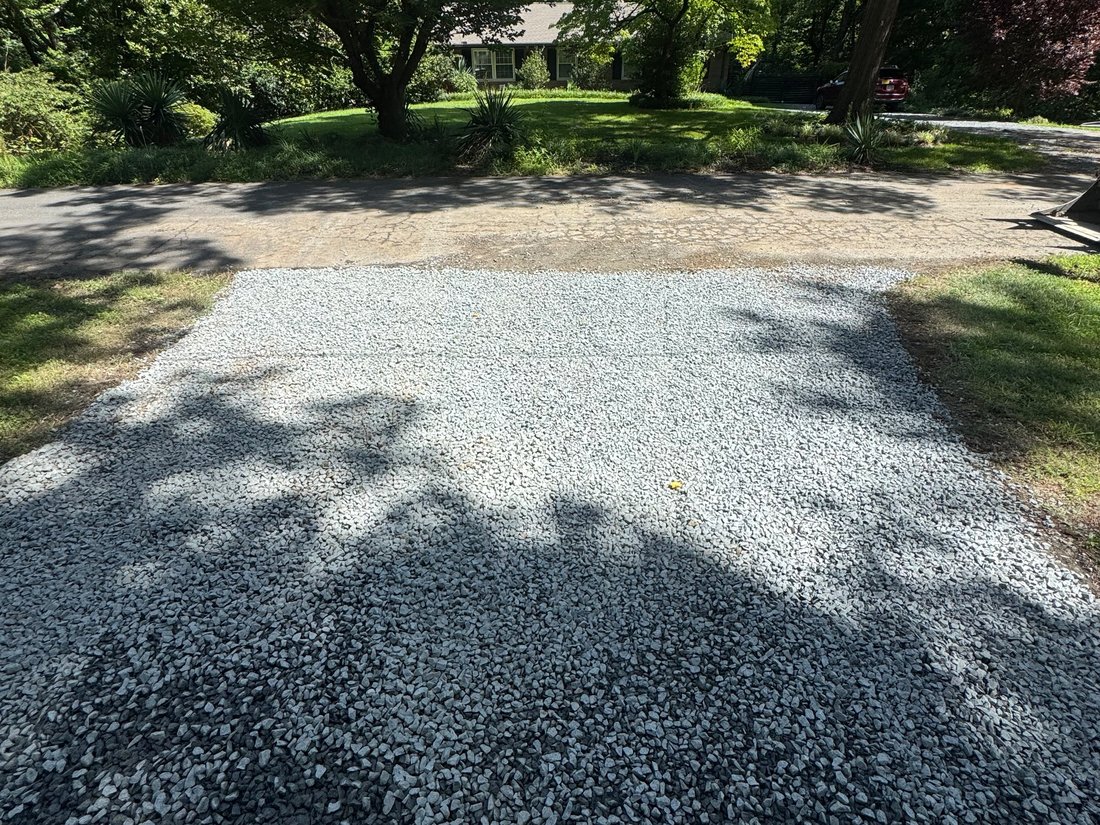
Grading and gravel driveways for Mooresville and Lake Norman — long drives on acreage, steep lake-lot drives, culverts at the road, slopes that wash toward the water. Flat written quotes.
Grading around Mooresville is about distance and slope. A gravel drive here isn't a short run off a city street — it's a few hundred feet of clay off a state road, with a culvert at the ditch and a grade that either sheds water or collects it. Lake lots add the other problem: the driveway falls toward the water, the house sits on a bench cut into the hill, and every heavy rain tests whether the grade was done right. We build and rebuild drives and lot grades so the water goes where it should on the way down.
Ranges for long acreage drives, steep lake drives and pads on rolling ground. Detail in the cost guide; your figure is written and flat.
One written number after the walk from the road in. No hourly billing.
A long gravel drive fails from the road in. The culvert at the ditch silts up or was never sized right, water backs onto the drive, and the first hundred feet turn to soup every winter. Then the stone migrates downhill and the crown disappears. Rebuilding a Mooresville drive means fixing the crossing first — the right culvert, set at the right fall — then cutting the drive back to a compacted base with crown so water leaves to the sides instead of running down the middle. Fresh stone last, placed in a lift, not dumped at the top and pushed.
Lake lots are the reverse problem: too much fall, not too little. The drive drops from the road to a house bench, and behind the house the grade keeps going to the water. Clay on a slope like that washes the moment it's disturbed. We grade with swales that carry runoff across the slope to a place it can leave slowly, and we keep silt control up until the ground is stabilized, because a washout on a lake lot ends up in the lake and in a complaint.
Pads on acreage — for a barn, a shop, an RV or a shed — are cut into the rolling grade and compacted in lifts. On this ground the temptation is to push fill into the low side and call it level; it settles within a year. Cut to level, compact, then stone.
The drives we rebuild most are off the two-lane state roads between Mooresville, Troutman and Sherrills Ford, and the steep ones down to the water on the Brawley School Road and Isle of Pines side of the lake. On the acreage drives the culvert is nearly always the failure; on the lake drives it's the grade itself, cut too steep and never crowned, so the stone ends up at the bottom by the garage.

Our track loader and dump truck fit through any 8 ft gate, but Mooresville lots usually give us the room to bring the machine the job actually needs — a larger loader for a long drive, an excavator for a culvert crossing. The constraint is that the driveway is also the only way in. We rebuild from the road inward so material can reach the work, and where the drive is too far gone to carry a loaded truck we stage stone at the road and move it in with the loader.
On lake lots we watch the slope and the season. A tracked machine across wet clay on a grade toward the water leaves ruts that become channels. If the ground can't hold the machine we hold the start, and we work across the slope rather than straight down it.
Clay we cut is used on site wherever a low spot needs it — on acreage there's almost always somewhere — and anything that has to leave goes the same day to disposal inside Iredell County. No spoil piles left on the drive.
A word on stone: what's right for a long acreage drive is not what's right for a steep lake drive. Open-graded stone drains but rolls on a slope; a well-graded crusher run locks up and holds a grade but needs crown to shed water. We choose for the drive you have and explain why on the site walk, because the wrong stone on a Mooresville hill is a yearly expense.
Many roads around Mooresville are state-maintained, and a driveway connection or a culvert in a state road ditch is NCDOT's to approve. Inside the town limits on a town street, it's the Town of Mooresville. Behind the right-of-way line, land disturbance is Iredell County's, and the county's watershed overlay applies to much of the land draining to Lake Norman — which is most of the lake side of town. Residential drives and pads usually sit under the county's erosion-control threshold; we confirm on the site walk and we don't disturb more than the job needs on a lot that drains to the lake.
Should any of those offices require a permit, we handle the paperwork and you pay exactly what the town or county bills — the fee shows on our invoice at cost, with nothing added.

We walk the drive from the road in within a few days, check the ditch crossing, watch where the water goes on the slope, and confirm the scope.
One written, all-in number by the next business day — culvert, base, crown and stone stated separately so you can see where the money goes. Road approvals handled at cost.

Our machines, our operators. Crossing first, then base, crown and stone from the road inward. Slopes graded to carry water across, not down.

Drive that carries a truck in February, grade that holds through a summer storm, pad ready for the building.
Clearing before it, a pad or a foundation after it, a culvert and a septic-related dig somewhere in between — on Mooresville acreage the same crew handles the sequence, with the road connection and the watershed rules already worked out.
Send the address and what you're dealing with. We'll walk it within a few days and hand you a flat, all-in number.
📞(980) 351-5115Tap to call · A real owner picks up · Site walk within a few days