House demolition for Charlotte teardown-and-rebuild lots β tight lots between neighbors, historic-district checks, asbestos surveys, utility disconnects, permits pulled at cost. Flat written quotes.
Charlotte is a teardown market. In Myers Park, Eastover, Cotswold, SouthPark and the streets around Dilworth, the house that's there is worth less than the lot under it, and the plan is to take it down and build. The job is not the demolition β a wood-frame house comes down in a day. The job is everything around it: the neighbor's house a few feet off the line, the willow oak the city protects, the historic-district review if the lot is in one, the asbestos survey the state wants before anyone swings, and the disconnects that have to be confirmed before the excavator arrives.
Starting points for infill-lot teardowns, with permit, survey coordination, disconnects, haul-off and rough grading in the number. The demolition cost guide has the full breakdown.
One written, all-in figure after the site walk. Permit fees passed through at cost.
Three things can stop a Charlotte demolition before it starts, and we run them down first. Whether the lot sits inside a local historic district β Dilworth, Plaza Midwood, Wesley Heights and others have them β where demolition needs the Historic District Commission's review before a permit is issued. Whether any tree on the lot is protected under the city's tree ordinance, which changes where the excavator can swing and where debris can be staged. And whether the house needs an asbestos survey, which for most older Charlotte houses it does, with the state notified before demolition. None of these are obstacles if they're started early; all of them are delays if they're discovered the week of the job.
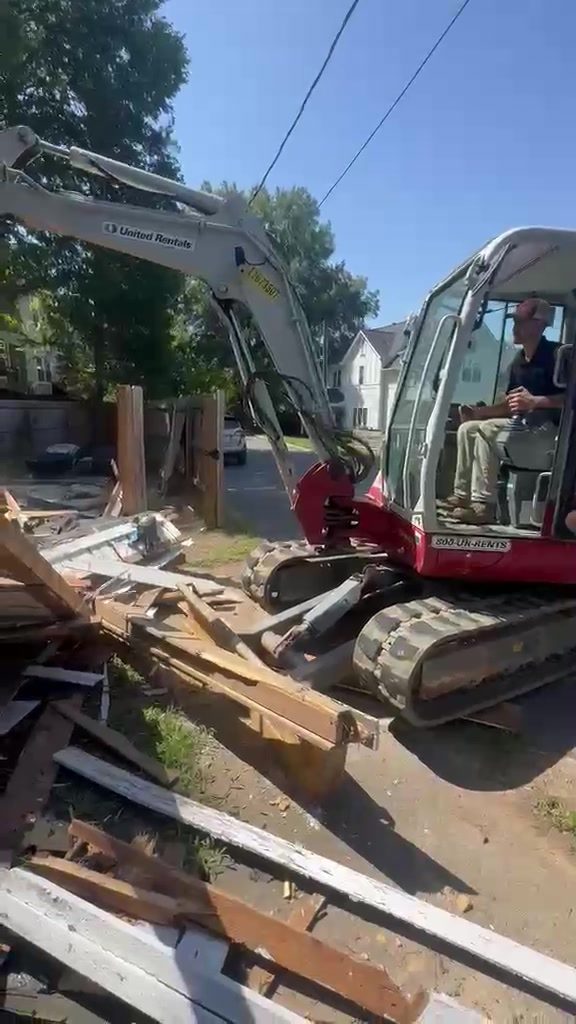
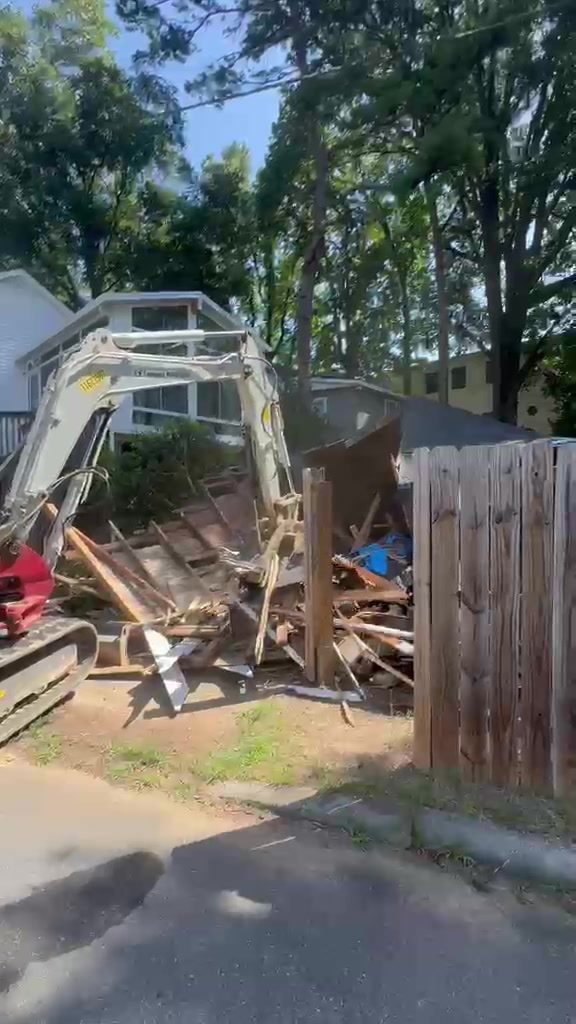
Then there's the lot itself. A Cotswold or Myers Park lot has the house set close to the side lines with a neighbor's house, fence and mature landscaping on each side. The teardown is sequenced so the structure falls inward and the excavator's swing never crosses the line. The foundation comes out and the hole is backfilled and compacted in lifts β a Charlotte lot on clay that's just pushed level will settle under the new footings.
Utility disconnects are coordinated, not assumed. Charlotte Water for water and sewer, Duke Energy for electric, Piedmont Natural Gas for gas β each confirmed in writing before the machine is on the street. A demolition with a live gas line is the one mistake there is no recovering from.
The lots that come to us are the ones a builder has already bought or a family has decided to rebuild on: a post-war rancher in Cotswold or Madison Park that's smaller than everything around it, a bungalow in Dilworth or Elizabeth on a street where the neighbors have already rebuilt, a brick house in Foxcroft or Sharon Woods that's worth more as a lot. The house is rarely the interesting part. What's next to it, under it and above it is.
A house teardown needs an excavator, and an excavator needs a way in. On a Charlotte infill lot that's the existing driveway and, once the house is down, the footprint itself. Our smaller loader and dump truck fit through any 8 ft gate for the cleanup, but the excavator comes in from the front, and how it gets from the street to the house β over the drive, across the front yard, past the protected tree β is planned on the site walk with the neighbors' property in mind.
Staging is the other Charlotte constraint. There's no room on a tight lot for a debris pile, so the house is loaded as it comes down and trucks cycle to disposal inside Mecklenburg County through the day. The street stays clear, the neighbors' drives stay open, and by evening the lot is a hole and a graded pad, not a mountain of lumber.
We walk the perimeter with you before the machine starts and again after it's done. Fences, landscaping and driveways on both sides are photographed before and after. That's how a teardown between two occupied houses ends with both neighbors still speaking to you.
What we ask of you before the day: move anything you want to keep out of the house and the yard, tell us about the well you think might be under the back porch or the oil tank that might be under the side yard, and let your neighbors know the date. Older Charlotte lots hide things β abandoned heating-oil tanks, old wells, a second slab under the carport β and knowing about them early is the difference between a scheduled day and an unscheduled one.
One Charlotte-specific point on timing: the historic-district review, the asbestos survey and the utility disconnects each run on their own clock, and they run in parallel only if they're started together. We start all three the week you engage us, because the demolition day is fixed by the slowest of them, not by when the excavator is free.

Demolition permits for Charlotte addresses come through Mecklenburg County's permitting office, with the City of Charlotte's zoning, tree and historic-district rules applied before the county issues one. The state's asbestos program requires notification before a residential demolition in most cases. We pull the permit, file the notification and coordinate the survey; the permit fee is a straight pass-through β you pay what the county charges and nothing on top of it.
Trucks run to Mecklenburg County's construction-and-demolition landfill as the house comes down, and concrete and metal are pulled aside for recycling before they go. The debris never leaves the county and the disposal cost is inside the flat number, not a line that appears later.

Within a few days we walk the lot, check historic-district status and any protected trees, route the excavator, plan the swing and photograph both neighbors' sides.
A single all-in figure in writing by the next business day: permit, survey coordination, disconnects, teardown, hauling and rough grading. Permit fee passed through unchanged.

Disconnects confirmed, survey complete, permit issued. The structure folds inward, is loaded as it drops, and cycles out to county disposal through the day.

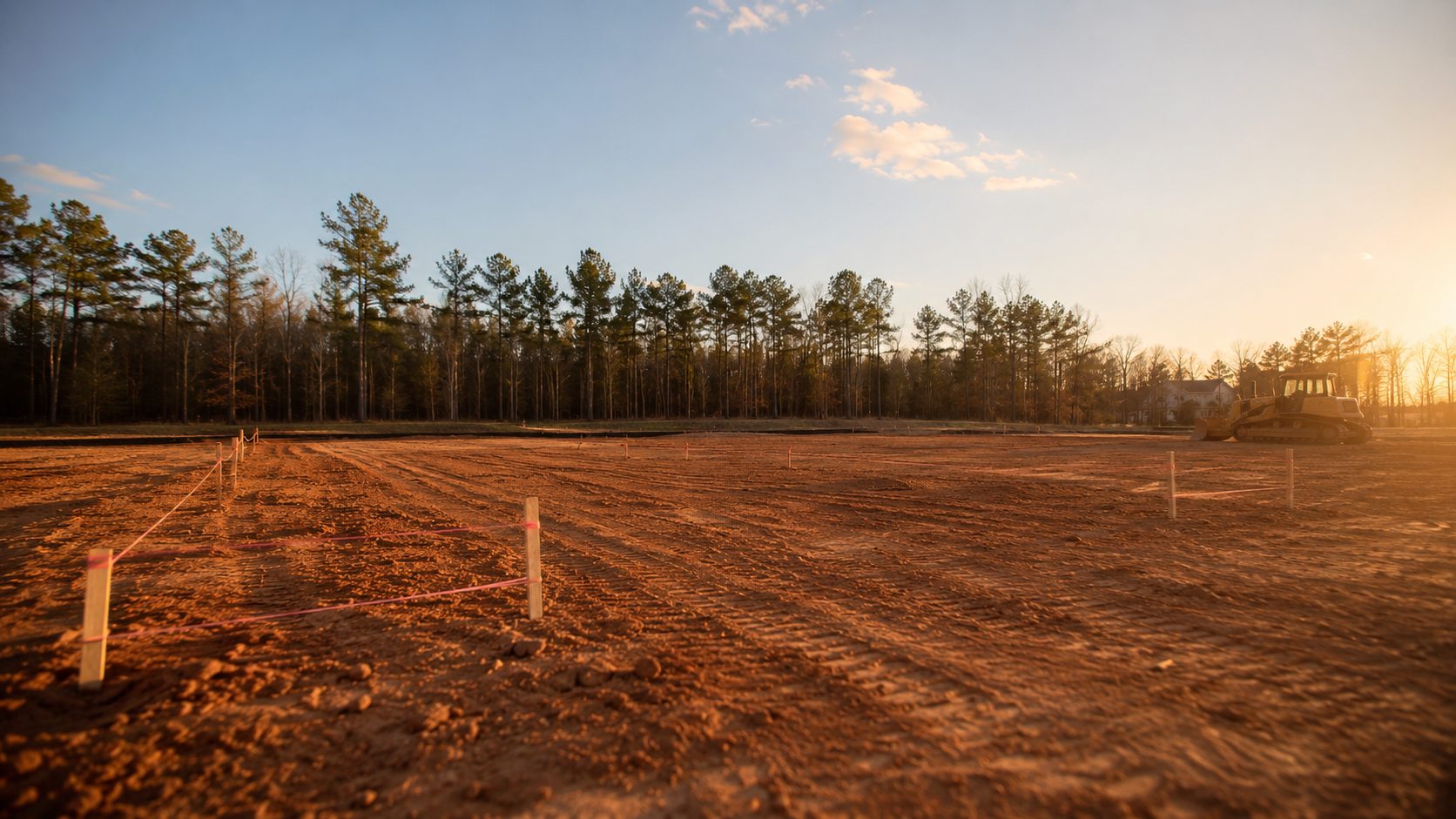
Foundation out, hole compacted in lifts, lot rough-graded and clean, with the documentation your builder and lender want.
Once the house is gone we rough-grade the pad, relocate the drive if the plan moves it, and take out whatever stumps or trees the new footprint needs β using the tree and historic-district map we already made for the teardown.
Send the address and what you're dealing with. We'll walk it within a few days and hand you a flat, all-in number.
π(980) 351-5115Tap to call Β· A real owner picks up Β· Site walk within a few days