Grading and gravel driveway work for Charlotte lots — red clay that won't drain, rutted drives, washing slopes, pads for sheds and garages, and the right-of-way rules at the street. Flat written quotes.
Almost every grading call inside Charlotte starts with water in the wrong place. A side yard that stays soft until June, a gravel drive that ruts every winter, a slope behind the house that's washing toward the neighbor's fence, a spot where the new shed or garage needs to sit level. The cause is nearly always the same: red Piedmont clay that sheds water on the surface instead of soaking it up, on a lot that was graded once when the house was built and never again. We regrade it so the water leaves the way it should.
Local ranges for repairs, rebuilds and pads on city lots. See the cost guide for the detail; every job gets one written number.
Flat rate, in writing, after we walk the lot. Never hourly.
Charlotte clay is the whole story. It's dense, it holds water in a low spot for days, and once a surface is compacted it runs off like pavement. On a lot in Cotswold or Madison Park that was cut fifty years ago, the original grade has settled, the neighbors have built up their side, and the water now has nowhere to go but your foundation or your drive. Regrading means re-establishing fall away from the house and toward a place the water can leave — a swale, the street, a drain — and building it so it stays that way.
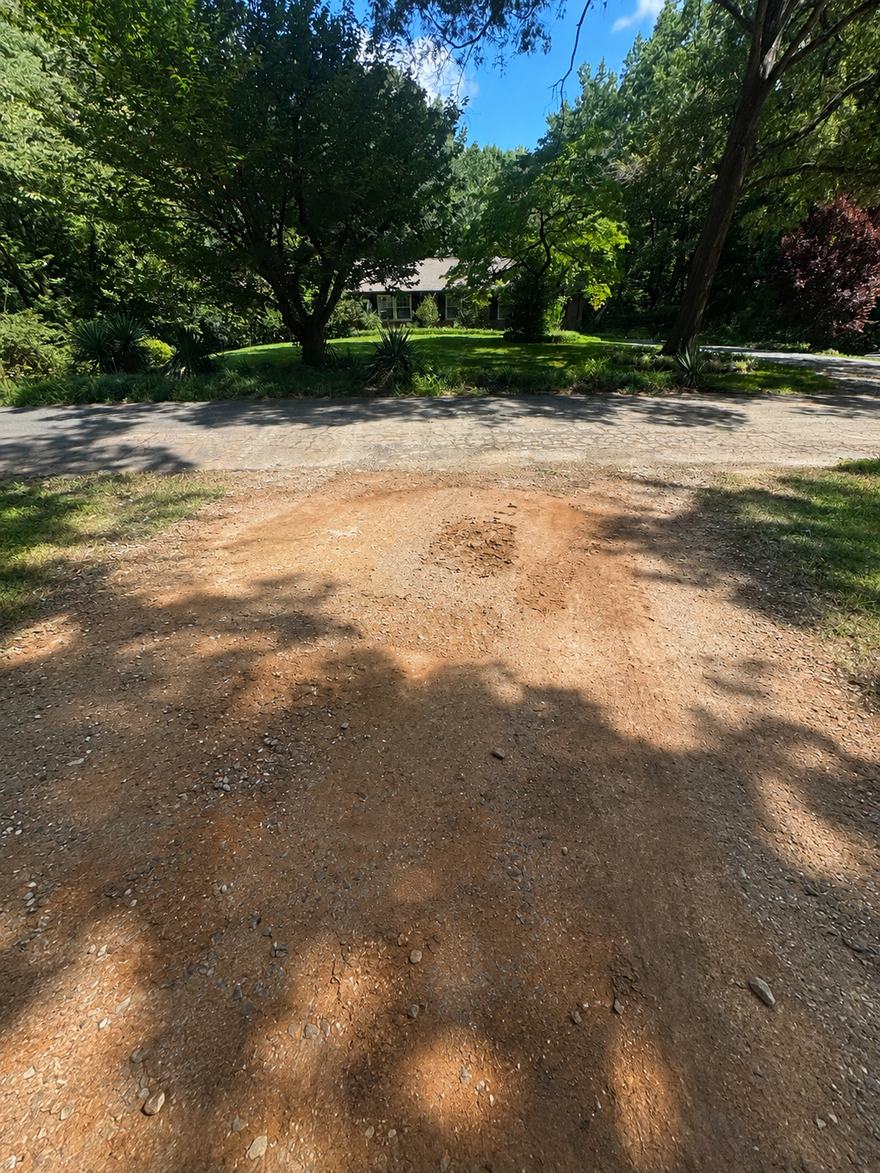
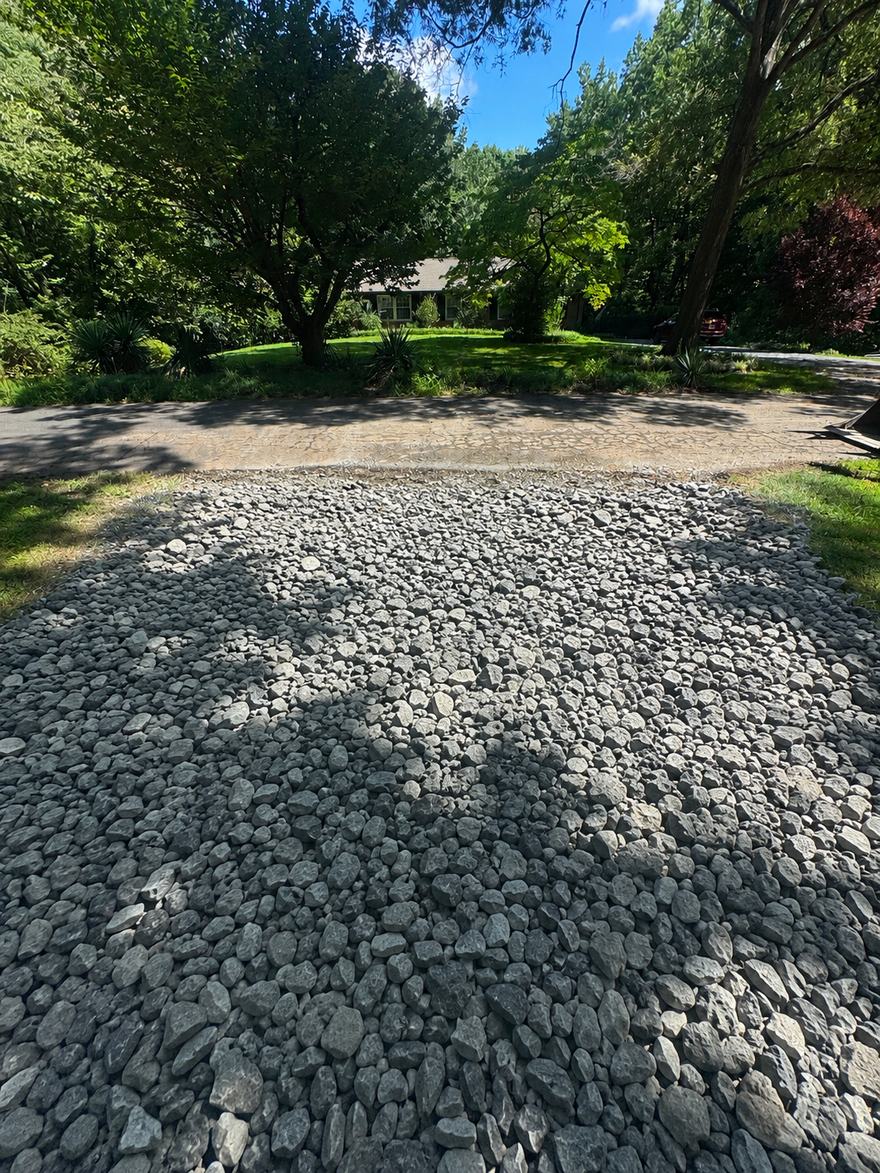
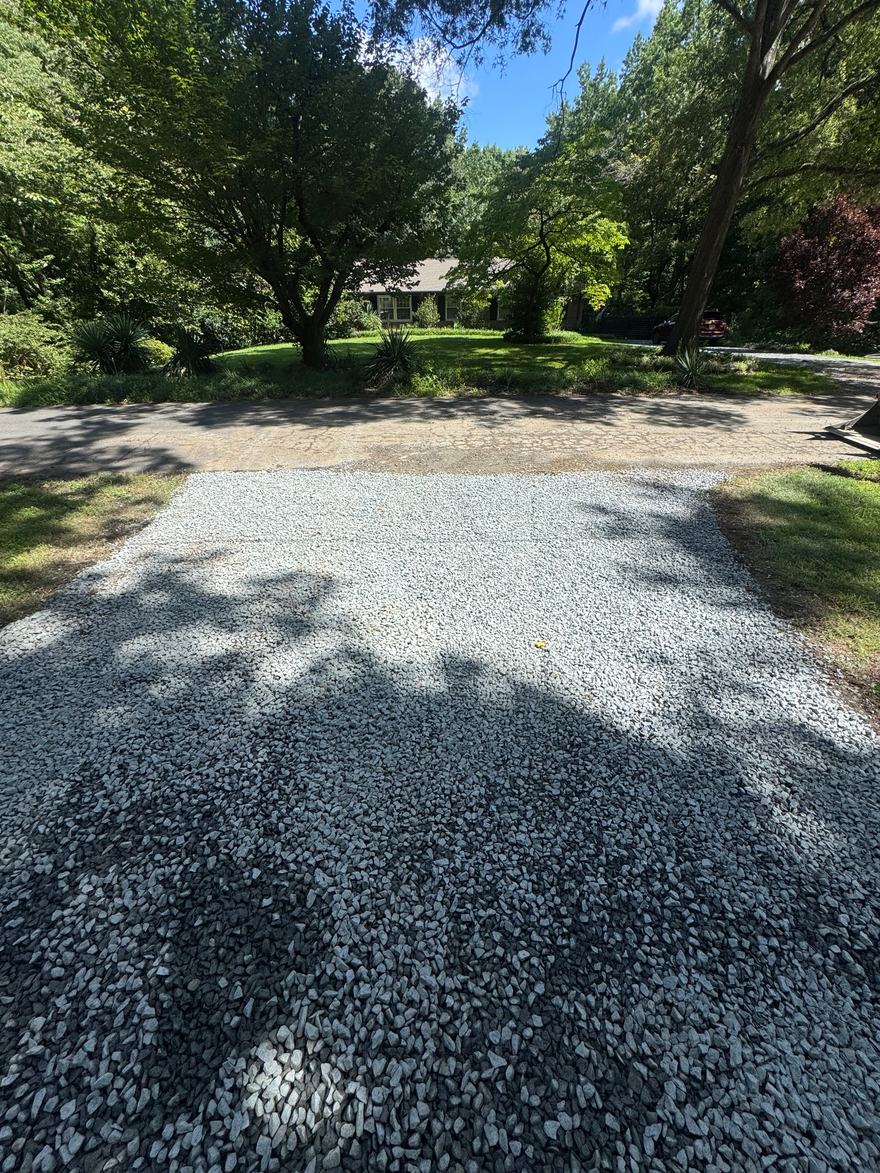
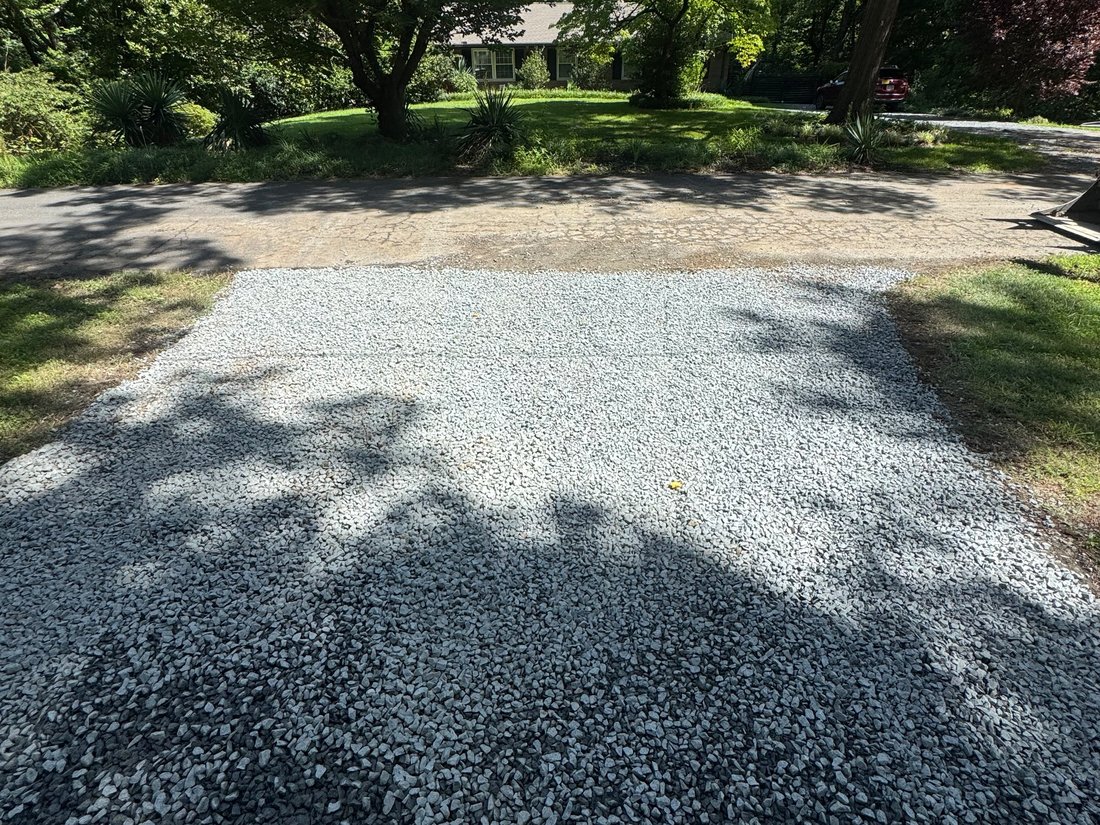
Gravel drives inside the city are mostly older lots in the east and south — Hickory Grove, Steele Creek, the older streets off Providence and Albemarle Road — and they fail the same way every time. The base was thin or never compacted, the drive got topdressed a few times, and now the stone sits on top of a rut-shaped clay bed. Topdressing again lasts a season. Cutting the old base out, regrading with crown and compacting a new base before the stone goes down lasts. That's the difference between a repair and a rebuild, and we'll tell you which one your drive needs.
Pads are the other common Charlotte job: a level, compacted base for a shed, a detached garage, a hot tub or a parking spot on a lot that isn't level anywhere. A pad on clay is cut into the grade and compacted in lifts, not built up with loose fill, or it settles under the first heavy thing you put on it.
Two Charlotte details change the drawing. First, many older lots sit lower than the street, so the drive falls toward the garage and any regrade has to catch water before it reaches the door. Second, the city's storm drains take the runoff from your lot only if the grade delivers it to the curb or a catch basin; a regrade that just moves the puddle to the property line hasn't fixed anything. We design the fall to an actual outlet.

Our track loader and dump truck fit through any 8 ft gate, and on a Charlotte lot the gate is often the deciding factor: a rear-yard regrade or a shed pad behind a house in Elizabeth or Plaza Midwood means everything comes in through the side yard. We size the machine to that opening and plan where the spoil goes before the first cut, because on a tight lot there's nowhere to stockpile clay while you work.
Driveway work brings its own access problem — the drive is the access. Where the existing drive is failing, we stage on the street and bring material in rather than run a loaded truck over a base we're about to rebuild. Where the street is narrow or the HOA restricts staging, we sequence deliveries so the stone arrives when it can go straight down.
Spoil from a Charlotte regrade — the clay we cut to fix the fall — either gets used on site to fill a low spot or is hauled to disposal inside Mecklenburg County the same day. Stone comes in by the load and is placed, not dumped and pushed, so the crown and the edges end up where the drawing says.
The Spicewood Drive area job is the pattern we see over and over: a gravel drive that had been topdressed for years over a base that had failed, dusty in August and rutted in January. The owner's instinct was one more load of stone. The right answer was to cut it out and start from the base, and to choose the stone for the job — a smoother, low-dust surface where the drive is near the house, an open-graded stone where drainage matters most. We talk that choice through on site, not after.
The part of a Charlotte driveway that touches the street is the part with rules. The apron and anything in the public right-of-way fall under the City of Charlotte, and work there — a new connection, a culvert under the apron, changing the width — needs city approval before it happens. Behind the right-of-way line it's your lot, and land disturbance is governed by Mecklenburg County; residential grading and driveway jobs stay well under the county's erosion-control threshold, and we confirm on the site walk. We also make sure a regrade doesn't send your water onto the neighbor's lot, because that becomes a stormwater complaint fast.
If a permit turns out to be required, we pull it ourselves and pass the city or county fee through unchanged. There is no markup and no handling charge on it.

We walk the lot within a few days, watch where the water goes now, check the gate and the right-of-way line, and confirm the scope.
One written, all-in number by the next business day — repair or rebuild, stated plainly, with any city approval at the street built in at cost.

Our machines, our operators. Cut, compact, crown, drain. Stone placed, not dumped. Spoil used on site or hauled inside the county.

Grade sheds water the right way, drive holds a truck, pad is ready for what's going on it.
Most Charlotte grading jobs are the middle of something — clearing before, a shed or a garage after, a drainage fix that turns into a French drain. One crew handles the sequence so the grade you paid for is still there when the next trade shows up.
Gravel driveway installation and nearby city pages.
Send the address and what you're dealing with. We'll walk it within a few days and hand you a flat, all-in number.
📞(980) 351-5115Tap to call · A real owner picks up · Site walk within a few days